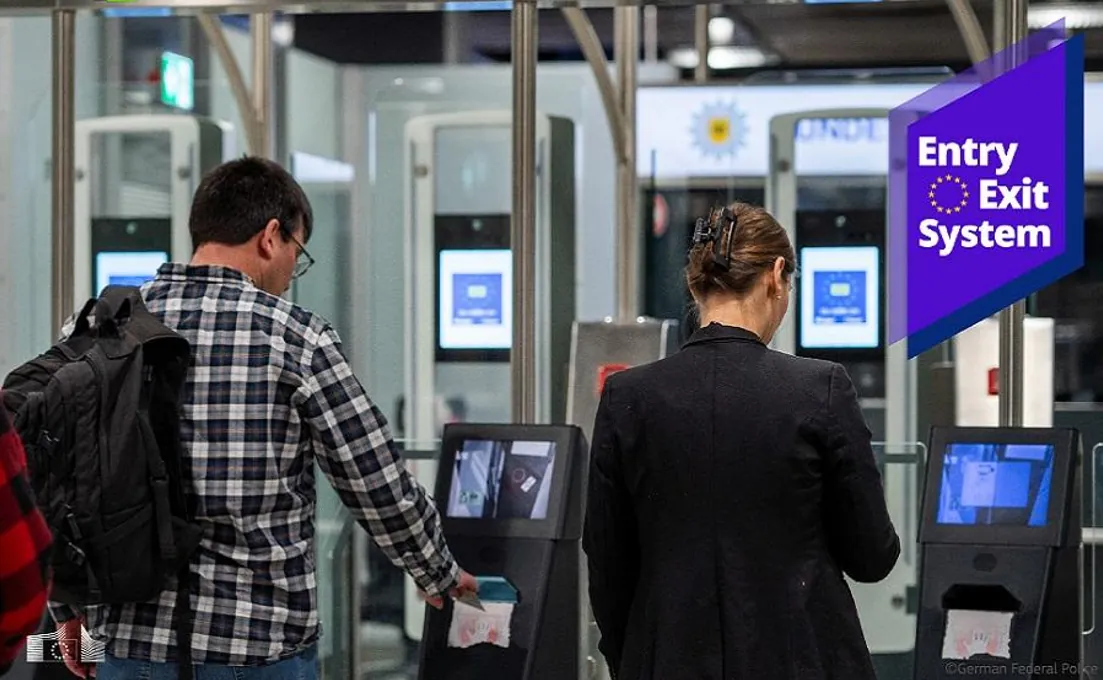
The EU's Entry/Exit System is being rolled out across the Schengen area and it's already causing confusion. We track government travel advisories nightly at AtoBeach, and EES questions have been the single most common thing people ask us about.
Here's what's changing and what it actually means for you.
Passport stamps are on the way out
EES is replacing the old system of manually stamping passports. Border control now registers your fingerprints and a photo on your first entry into the Schengen area. That registration links to your passport digitally for three years.
While EES is still being rolled out, you should still make sure your passport gets stamped on entry and exit. Both systems are running side by side for now, and border guards will still check stamps to verify you haven't overstayed. If your passport is missing a stamp, show evidence like boarding passes and ask them to add the date and location.
Your first trip will take longer
On your first visit, expect extra time at passport control. You'll register your details at a special booth before proceeding to border control. Fingerprints, photo, the usual questions about your trip. You don't need to do anything before you arrive and there's no cost for registration.
After that initial registration, future entries should be quicker, though you may still need to provide biometrics depending on the country.
Border officers can still ask for everything they asked for before. Return tickets, proof of accommodation, travel insurance, proof of funds. EES doesn't replace those checks. It's an extra layer on top.
The passport rules that catch people out
Two things trip up British travellers more than anything else.
The 10-year issue date rule. Your passport must have been issued less than 10 years before you arrive. Before October 2018, the UK Passport Office used to add leftover months from your old passport onto the new one. So you might have a passport that looks valid but has more than 10 years between issue and expiry. Schengen countries won't accept it.
The 3-month expiry rule. Your passport needs at least 3 months validity after the date you plan to leave the Schengen area. Not when you arrive. When you leave. If you're cutting it close, renew before you book anything.
The 90/180 day rule, briefly
You can stay in the Schengen area for up to 90 days in any rolling 180-day period without a visa. EES is making this much easier to track digitally, which means overstays are harder to get away with.
The 180-day window rolls forward. It doesn't reset on a calendar year. So a trip in January and another in April both count towards the same window. There are calculators online that help with the maths if you're doing multiple trips.
Which countries does this cover?
All Schengen countries. That's most of the EU plus Iceland, Liechtenstein, Norway, and Switzerland. A few that people assume are covered but aren't: Ireland and Cyprus are not in the Schengen area.
We publish country-by-country guides covering entry requirements, passport rules, and health and safety info for most destinations. Check the travel guide for wherever you're headed if you want the specifics.