Bolivia Holidays
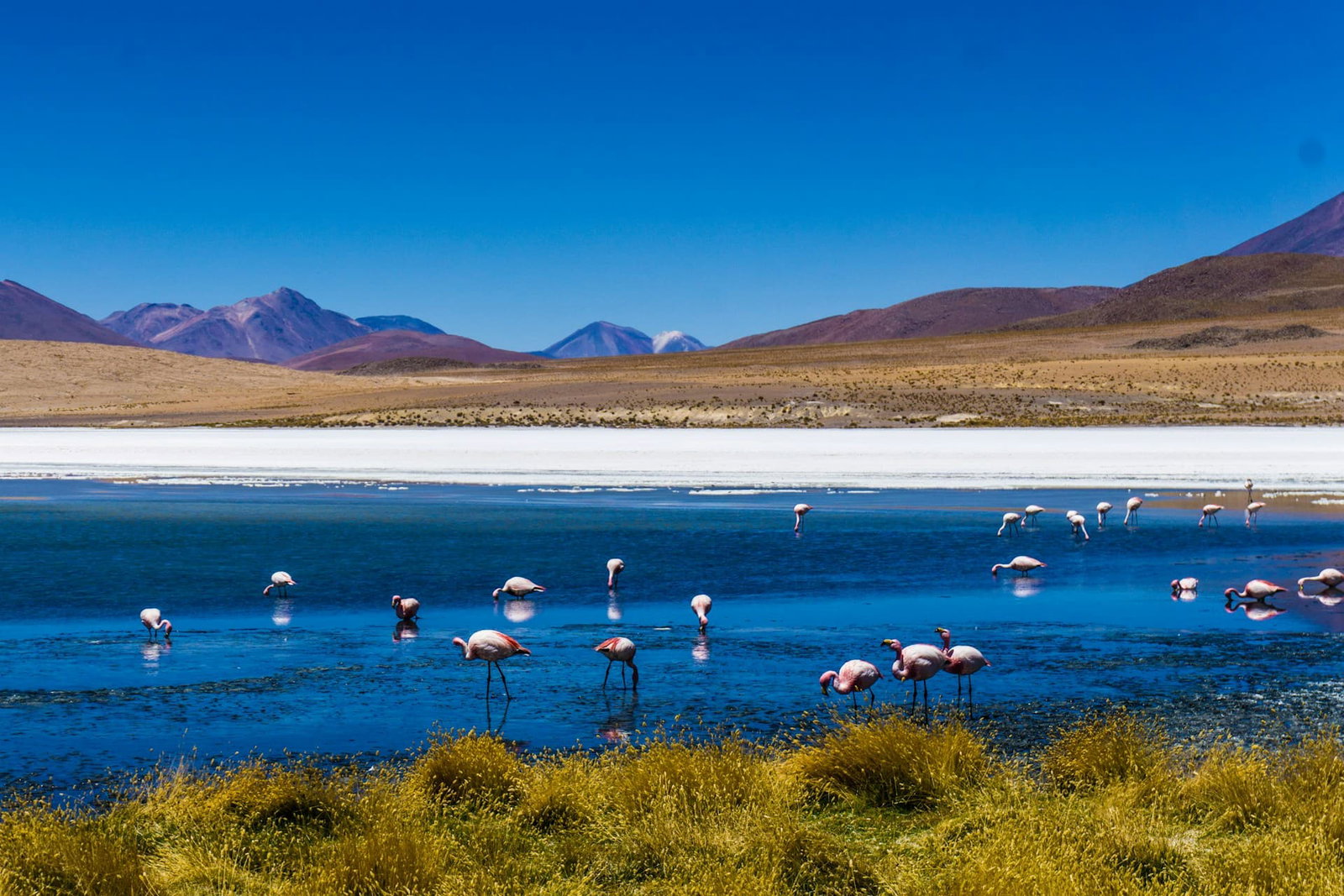
Salt flats, Lake Titicaca's island shores, and high-altitude adventure in the Andes. Get flights, travel tips, and essential info for Bolivia.
Today
Travel warning
Weather in Bolivia
Tue
Wed
Thu
SPF level in Bolivia
Autumn
SPF 50+
Spring
SPF 50+
Summer
SPF 50+ (extreme)
Winter
SPF 50+
Entry requirements for Bolivia
You can visit Bolivia for up to 90 days without a visa.
Your passport must have an expiry date at least 6 months after the date you arrive and at least two blank pages.
You may need to show proof of your accommodation, such as a hotel booking, for at least your first night.
Make sure you get an entry stamp when you arrive, otherwise you will have to pay a fine when you leave.
If you enter overland, get your passport stamped on both sides of the border with an exit stamp from the country you are leaving and an entry stamp from Bolivia.
Good to know:
If only one parent is travelling with a child, you cannot visit for longer than 90 days.
You must declare any goods that may be prohibited or subject to tax or duty using Bolivia's 250 declaration form.
Safety in Bolivia
Bolivia is tourist-friendly but has some key cultural and legal rules:
Keep valuables close in crowded areas, on buses and in tourist destinations.
Use established radio taxis ordered by phone, and never share one with passengers.
Do not enter unmarked police cars or hand over belongings to suspected fake officers.
Carry passport-page and entry-stamp copies; keep your original passport safely stored.
Avoid illegal bars, which can lead to detention, especially if drugs are found.
Bonus tips:
Never carry illegal drugs: any amount is treated as trafficking under local law.
Use reputable adventure operators and check your insurance covers planned activities.
Saily eSIM for Bolivia
Skip roaming fees with Saily, our partner eSIM provider. Use code ATOBEACH for 10% off. Plans start at €6.41 for 1GB, valid for 7 days.
Activates when you land
200+ destinations
Code ATOBEACH at checkout
Driving in Bolivia
A UK driving license is generally accepted for short-term visits. An International Driving Permit is recommended.
Side of the road
Right
Motorway speed limit
120 km/h
Urban speed limit
50 km/h
Alcohol limit
0.0%
Remember: Bolivia drives on the right. Take extra care at junctions if you normally drive on the left.
Health in Bolivia
As a British tourist, you should ensure you have comprehensive travel insurance that covers medical expenses, repatriation, and other unforeseen events. The GHIC/EHIC card is not applicable in Bolivia.
Consult your doctor or a travel clinic for the most up-to-date health advice and to discuss necessary vaccinations and malaria prevention. Drink bottled water, avoid ice, and be cautious about food hygiene. Altitude sickness is a concern in higher altitude cities such as La Paz; acclimatise gradually. Insect repellent is essential to prevent mosquito bites.
Cards & payments
Card acceptance is limited, especially outside of major cities. Cash is preferred for smaller establishments, markets, and rural areas.
Visa
Medium
Mastercard
Medium
American Express
Low
Lost card? Call Visa: +13039671096
Tipping in Bolivia
Tipping is not automatically included in bills in Bolivia, and while not compulsory, it is generally appreciated for good service. Locals may not always tip, but tourists are often expected to do so.
Restaurant
5-10% for good service
Bar/Café
Small change or 5-10% for table service
Taxi
Rounding up the fare is appreciated, but not mandatory
Hotel Porter
5-10 BOB per bag
Hotel Housekeeper
5-10 BOB per night
Tour Guide
5-10% of the tour price for a good tour
Mobile & roaming
Since the UK is no longer part of the EU, EU roaming agreements no longer apply. Check with your mobile provider for roaming charges in Bolivia. Roaming charges can be high, so consider purchasing a local SIM card.
Local SIM
5 GB for 350 BOB (~£40)
Network coverage
4G, 3G, 2G
Electrical in Bolivia
Voltage
230V / 50Hz
Plug types
Type A, Type C
UK adapter needed
WiFi & internet
WiFi is available in hotels, cafes, and restaurants in major cities, but can be unreliable. Rural areas may have limited or no internet access.
Average speed
10 Mbps
Internet access is generally available in cities, though the speed and reliability may vary. Consider a local SIM for more consistent access.
Emergency numbers
Universal emergency
110
Police
110
Ambulance
160
Fire
119
Save 110 in your phone before travelling.
Calling Bolivia
Country code
591
To call Bolivia from abroad, dial 591 followed by the local number.
UK Embassy
Avenida Arce 2732, La Paz, Bolivia
Phone
+591 2 2433424
Website
Viru Viru International Airport
El Alto International Airport
Jorge Wilstermann International Airport
Teniente Jorge Henrich Arauz Airport
Alcantari International Airport
Capitan Oriel Lea Plaza Airport
Recent updates
Natural Disasters
Weather can be unpredictable throughout the year, and snowfall can affect travel in Bolivia.
Travellers may become stranded in high, remote areas when roads are blocked or bad weather causes delays.
Carry food, water and warm clothing in case of delays or bad weather.
Beaches in Bolivia
No beaches listed for Bolivia yet.
Frequently asked Questions
While we strive to provide accurate and up-to-date information, AtoBeach cannot be held responsible for any inaccuracies. We recommend verifying details with official sources before travelling.