Best Time to Visit Saint Lucia

The best time to visit St Lucia depends on whether you are booking for the weather, the price, or a particular week on the calendar. The island is warm all year.
What changes is rain, humidity, hotel rates, and how many other people are trying to hike Gros Piton at 7am. We would send most first-time visitors in May, early June, or November, the honest middle between dry-season crowds and the heart of hurricane season.
The regional pattern sits in our best time to visit the Caribbean, and this page is the Saint Lucia version.
Quick facts
- Dry season runs December to May. Wet season runs June to November. That split is from the Saint Lucia Meteorological Services, not a brochure.
- Daytime highs sit around 29C in the cooler months and peak near 31.5C in September. Nights stay in the mid-20s. The sea is swimmable all year.
- High season is mid-December to mid-April. Shoulder months are May, June, and November. The cheapest rooms are usually September and October.
- Atlantic hurricane season is 1 June to 30 November, with the statistical peak in August to October.
- Saint Lucia Jazz & Arts Festival is late April into May, often using Pigeon Island. Carnival builds through June and peaks in July. Jounen Kwéyòl (Creole Day) is in October.
Saint Lucia weather by month
Rainfall is the variable that matters. Temperatures barely move.
The Met Service numbers split the island. Hewanorra in the south sees about 50 to 99 millimetres a month in the dry season and 136 to 191 millimetres in the wet season.
George F. L.
Charles in Castries, in the north, is wetter. About 66 to 129 millimetres in the dry months, 156 to 250 millimetres in the wet ones. The interior rainforest is wetter still.
Our Castries page keeps a three-year count of rainy days and daily maximums. Use it as a "will it actually rain on my Tuesday" check, not as a reason to cancel a trip.
A rainy day here is often a heavy shower and then sun, not a washed-out Atlantic week.
A month-by-month read:
- December. The dry season starts, Christmas lights go up, and the Atlantic Rally for Cruisers arrives in Rodney Bay. Rates jump. Book far ahead. Highs around 28C.
- January. One of the most reliable weather months, and one of the busiest. Cooler nights, lower humidity, peak winter-escape demand from North America and the UK.
- February. Still dry, still expensive. Independence Day is 22 February. Good hiking month because the trails are less muddy.
- March. Settled, warm, and still high season. Easter, when it falls here, is a spike. Rainy-day counts at Castries are among the lowest of the year.
- April. The last proper dry-season month. Jazz Festival setup can close Pigeon Island for stretches. Hotels are still busy, then start to ease after Easter.
- May. Our favourite all-round month. Rain returns in short bursts, Jazz & Arts Festival brings music, and room rates drop. Highs around 30C. A strong pick for both beaches and walking.
- June. Wet season and hurricane season begin on paper. Most days are still beach days. Carnival events start to appear. Good value if you can be flexible.
- July. Hot, lively, and Carnival month. Rainfall is up. The sea is very warm. Crowds are a mix of regional visitors and families on summer break, not the winter high-season crowd.
- August. Humid, showery, and inside the hurricane peak window. Prices are low. Water is at its warmest. Hiking Gros Piton at midday is a poor idea.
- September. The statistically riskiest hurricane month, the lowest prices, and some smaller hotels close for maintenance. Castries maximums peak around 31C. Pigeon Island may close for works.
- October. Still cheap, still wet, still hurricane season. Creole Heritage Month and Jounen Kwéyòl are the cultural reason to come. The island is very green.
- November. Storms ease, rates stay friendly, and the dry season is close. A strong shoulder month if you can travel just before the December price jump.
Season breakdown
December to April, the dry high season
This is the classic window, and it is the one most brochures mean by the best time to visit St Lucia. Trade winds, lower humidity, and fewer all-day soakers.
It is also when a standard room in Rodney Bay can cost what a nicer room costs in September.
Crowds show up at Sulphur Springs, on the Gros Piton trail, and on the west-coast catamarans. Book those the day before, or earlier around Christmas, New Year, and Easter.
The things to do in Saint Lucia list still works. You just share it with more people.
May, June, and November, the shoulder
May is the month we would actually book for ourselves. You get most of the dry-season weather, Jazz Festival energy if that is your thing, and prices that have started to fall.
June is a step wetter and the official start of hurricane season, but a typical June week is still full of usable beach mornings. November is the reset.
The island is lush, the storms are usually fading, and December prices have not arrived.
If your dates are flexible, pick one of these three before you pick February.
July to October, wet, cheap, and a calculated risk
Rainfall is higher, showers last longer, and you should watch the forecast from August. That is not the same as "do not come."
Plenty of summer trips are fine. The ones that go wrong are the ones booked on non-refundable rates with no insurance during the September peak.
Carnival in July is the reason to accept the humidity. September and October are the reason to accept the rain, because the bill at the hotel is the lowest of the year.
Some restaurants in Soufrière run shorter hours. A few small properties close.
Beaches versus hiking
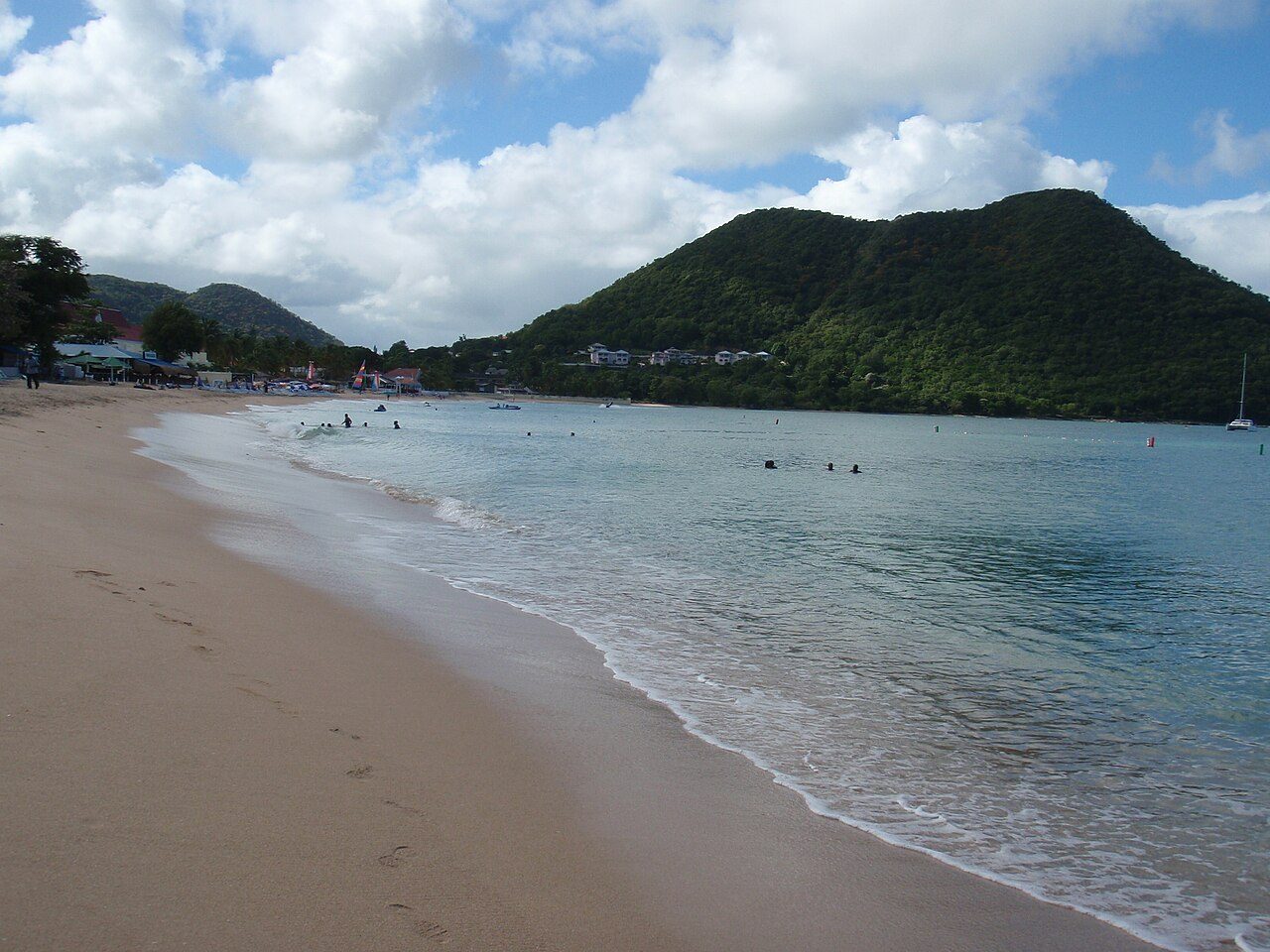
You can swim in Saint Lucia every month. The water is warmest from August to October, around 29C, and still comfortable in February.
The best beaches in Saint Lucia on the west and north coasts stay calmer than the Atlantic east coast, which is not where you plan a swim. Anse Chastanet is also on our best beaches in the Caribbean list.
Hiking is more seasonal than swimming.
- Best hiking months. January to April, when Gros Piton and Tet Paul are less slippery and the views are clearer.
- Still good. May and early June, if you start at dawn and carry a dry bag for the phone.
- Harder work. August to November. Mud, afternoon convection showers, and heat on the exposed upper trail. Tet Paul is the better call than Gros Piton in a wet week.
- Best beach-first months. December to April for reliable sun on Reduit and the south-west coves. May and June if you want the same beaches with more room on the sand.
A north-coast stay around Rodney Bay is the easier wet-season base. You can walk to Reduit when a Soufrière day looks grey.
A Soufrière stay is the better dry-season base, because that is when you will actually use the Pitons, the volcano, and Anse Chastanet on back-to-back days.
Cheapest and busiest months
Cheapest:
- September and October, by a distance, on rooms and often on flights.
- Late May, June, and early November sit in the next band down from high season.
Busiest and priciest:
- 20 December to the first week of January.
- February and the Easter week, whenever Easter falls.
- Jazz Festival dates in late April and early May, around Pigeon Island and the north, even though island-wide rates are no longer at Christmas levels.
If the budget is the constraint, take September with flexible bookings, or take late May and spend the saving on a west-coast boat day. If the constraint is school holidays, you are in July and August with everyone else. Book the Gros Piton guide before you land.
Hurricane season
The Atlantic hurricane season runs from 1 June to 30 November. Saint Lucia sits in the hurricane belt.
Direct hits are not annual, but they happen. Hurricane Tomas in 2010 did serious damage.
Elsa in 2021 was a reminder that "south of the main track" is not a guarantee.
What that should change in your booking:
- Travel insurance that names hurricanes, and rates you can change. Non-refundable September deals are cheap until they are not.
- A watch on the National Hurricane Center from August, not a plan built on hope.
- The Saint Lucia Tourism Authority has offered a Holiday Guarantee on some bookings when a named storm interferes. Read the current terms before you rely on it.
- Aruba and Curaçao sit outside this belt. If you must travel in September and cannot take any storm risk, those islands are the safer regional bet. Our best islands in the Caribbean guide flags that split.
A wet-season week with no named storm is still a Saint Lucia week. Pack a light rain jacket, start outdoor days early, and keep a spa or plantation morning in your back pocket.
Getting there and getting online
Hewanorra International (UVF) near Vieux Fort takes the long-haul flights. George F.
L. Charles (SLU) in Castries takes regional ones.
UVF to Rodney Bay is a 90-minute winding transfer. UVF to Soufrière is shorter.
If you land in the south and stay in the north, do not plan Gros Piton the same afternoon.
UK visitors should know a driving licence is valid for up to three months, and a temporary local permit is still required for a hire car. The island drives on the left.
Licensed taxis and one boat day cover a lot of trips without a car.
Roaming from a UK phone is not cheap here. Every AtoBeach country guide has a Saily eSIM panel, and readers get 10% off with code ATOBEACH.
The setup notes and the checkout step are in our Saily partnership post. Buy the plan before you fly, so data is waiting when you land at UVF.
Frequently asked questions
When is the best time to visit St Lucia?
May is the month we would book for a first visit. Dry-season weather is still mostly in play, prices have started to fall, and the island is not at Christmas density.
December to April is the safer weather bet if rain would ruin the trip for you. September is the price bet if you can stay flexible.
What is the weather like in St Lucia?
Hot and humid, with a drier half (December to May) and a wetter half (June to November). Expect daytime highs around 29C to 31C and nights that barely drop.
The north is wetter than the south. Brief, heavy showers are normal even in the dry months.
How is the weather in St Lucia in December?
December is the start of the dry season and the start of high prices. You get more reliable sun than in October, Christmas events, and a busy north coast. Book rooms and airport transfers early.
How is the weather in St Lucia in February?
February is one of the driest, most in-demand months. Good for hiking and for Reduit Beach. Not good for last-minute bargains.
How is the weather in St Lucia in March?
March is still high season, still relatively dry, and slightly warmer than January. Easter can land in March or April and will take the last easy hotel inventory with it.
How is the weather in St Lucia in September?
September is hot, wet, and the peak of hurricane season. It is also the cheapest month.
Come only with insurance and a booking you can move. Some smaller hotels close.
Is it worth visiting during hurricane season?
Yes, if you treat it as a probabilities season rather than a write-off. June, July, and November are easier to recommend than September.
August and October sit in between. Never gamble a non-refundable honeymoon on a September week.
Once you have a month, the next decision is north versus Soufrière, and which of the things to do in Saint Lucia you actually want to fit in. Tell Atlas your dates and budget and it will match them to flights and stays.
For the wider region, use the best time to visit the Caribbean. The island guide is Saint Lucia.