Things to Know Before Visiting Saint Lucia

Saint Lucia is an easy island to love and a slightly awkward one to arrive at unprepared. Two airports, a winding west-coast road, a currency most visitors have never held, and a set of small rules (one of them about camouflage clothing) that are worth knowing before you land rather than after.
This is the practical briefing we would give a friend, in one place. The scenery and the selling points live in our Saint Lucia guide; this page is the small print.
Quick facts
- Language: English is official. Saint Lucian Creole (Kwéyòl) is spoken everywhere and is part of the island's identity, especially in October's Creole Heritage Month.
- Currency: the Eastern Caribbean dollar (XCD), pegged at 2.70 to the US dollar. US dollars are widely accepted; change comes back in XCD.
- Time zone: Atlantic Standard Time, UTC-4, with no daylight saving. That is 4 hours behind the UK in winter and 5 in British summer time.
- Plugs: mostly the UK-style three-pin type G at 230V. UK visitors can usually leave the adapter at home; US visitors need one.
- Driving: on the left. A temporary local permit is required for a hire car.
- Emergency number: 911 works, as does 999.
Is Saint Lucia safe?
For visitors, broadly yes. Most trips pass without incident, and the tourist areas of Rodney Bay, Soufrière, and the resort coast are well looked after.
Saint Lucia sits comfortably in our safest Caribbean islands conversation without making the very top of it.
The sensible precautions are the standard Caribbean set:
- Do not leave valuables on a quiet beach or visible in a parked car.
- Use licensed taxis at night, and agree the fare before setting off. Fares are fixed by route, not metered.
- Keep to the busy streets at the Gros Islet Friday street party and take a taxi back rather than walking dark lanes.
- Check the UK FCDO or US State Department advice near your travel date. It changes rarely, but it is the authority, not a blog.
Passports and entry
Your passport should be valid for your whole stay, and UK, US, EU, and Canadian visitors do not need a visa for a normal holiday-length trip. You may be asked for proof of onward travel and your accommodation address on the immigration form.
Rules can change, so confirm with the official government sources when you book.
One quirk worth repeating from our packing conversations: camouflage clothing is illegal in Saint Lucia, for adults and children. It is a real law across several Caribbean countries, not folklore. Leave the camo shorts at home.
The two-airports problem
This catches more people than anything else on the island:
- Hewanorra International (UVF) is in Vieux Fort, at the far southern tip. Nearly all long-haul flights (London, US East Coast) land here.
- George F. L. Charles (SLU) is in Castries, in the north. It handles small regional aircraft.
- UVF to Rodney Bay is about 90 minutes by road. UVF to Soufrière is 45 minutes to an hour. Neither is a surprise you want on landing day.
- Book the transfer before you fly, or plan a Soufrière stay for the first nights and move north mid-trip. Our things to do list is organised around exactly that north-south split.
Getting around
You do not need a hire car if you pick your base well. The realistic options:
- Licensed taxis. Everywhere, unmetered, route-priced. Agree the number and the currency before you get in.
- Minibuses. The green-plate M buses run fixed routes cheaply, mainly Castries to Gros Islet and along the west coast. Great for daytime hops, not for a 10pm restaurant run.
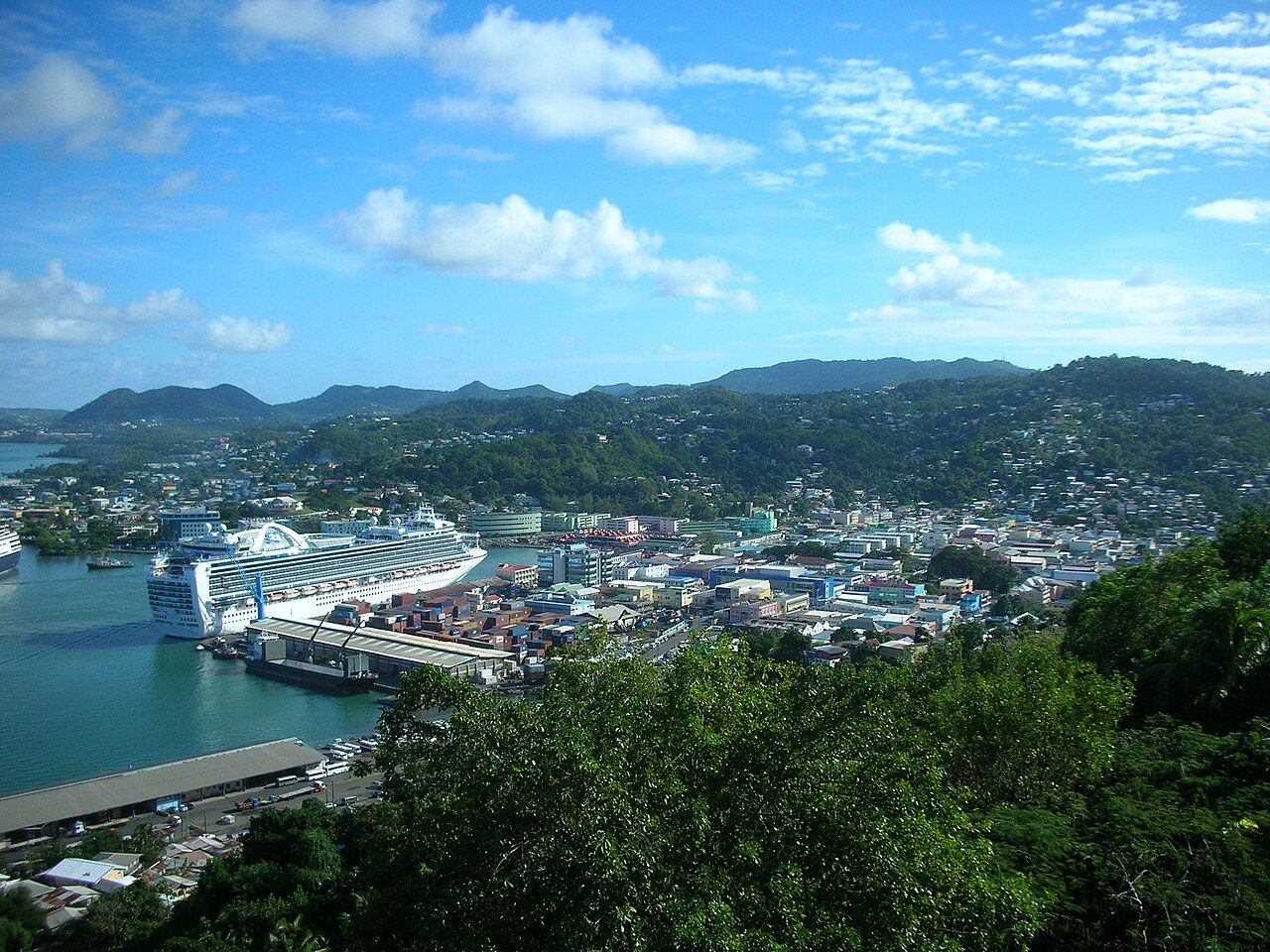
- Water taxis. The west-coast shortcut. Soufrière to Anse Chastanet or Sugar Beach by boat beats the steep roads, and a Rodney Bay to Soufrière boat day doubles as sightseeing.
- Hire car. Useful for explorers; remember the left-hand driving, the temporary permit, and that the west-coast road is beautiful, narrow, and slow. Do not drive it for the first time at night.
Money, tipping, and prices
- Cards are fine in hotels and most restaurants; carry XCD cash for markets, minibuses, beach vendors, and fish fries.
- Many bills add a 10 per cent service charge plus tax. Where service is not included, 10 to 15 per cent is normal.
- Restaurant and activity prices are often quoted in US dollars, local prices in XCD. Always confirm which dollar a quoted price means. The gap is 2.7x.
- Budgets, per-day costs, and the ways to keep them down get their own page: is Saint Lucia expensive?
Health and the practical bits
- Tap water is officially treated; most visitors still drink bottled or filtered, especially after storms.
- Mosquitoes are a fact of life, worst at dawn and dusk in the wet season. Bring repellent rather than buying it at resort prices.
- The sun is equatorial-strength. Reef-safe sunscreen, a hat, and a rash guard for snorkelling earn their luggage space.
- No routine extra vaccinations are required for most travellers, but check the NHS Fit for Travel or CDC pages when you book.
- Hurricane season runs June to November, peaking August to October. It is a probabilities game, not a closed season; our best time to visit guide covers how to play it.
Where to stay, briefly
The island splits into two bases, and choosing wrong for your plans is the most common regret we hear:
- The north (Rodney Bay, Gros Islet). Easy swimming at Reduit, restaurants, nightlife, the Friday street party. Furthest from the Pitons.
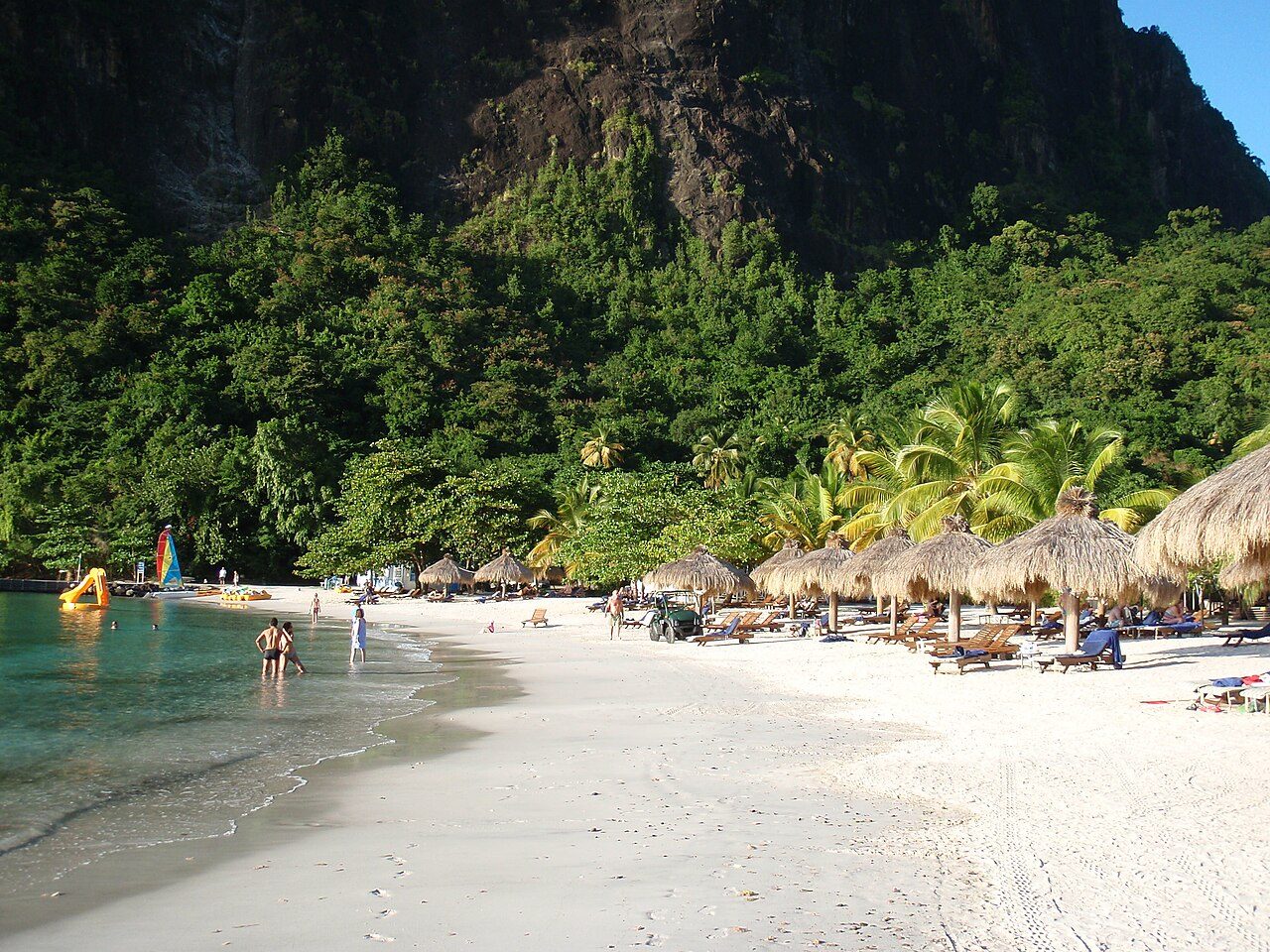
- The south-west (Soufrière). The Pitons, the volcano, Anse Chastanet's snorkelling, the drama. Quieter nights, steeper roads, pricier boutique stays like the resorts above the famous beaches.
Staying connected
UK roaming charges in Saint Lucia are steep, and hotel WiFi is best treated as a bonus rather than a plan. Every AtoBeach destination guide has a Saily eSIM panel; buy a plan before you fly, and it activates when you land.
Readers get 10% off with code ATOBEACH at checkout. The full setup steps are in our Saily partnership post.
Frequently asked questions
Is Saint Lucia safe for tourists?
Yes, with normal Caribbean-city common sense: licensed taxis at night, nothing valuable left unattended, and an eye on official travel advice. Solo and family trips are both routine here.
Do you need a passport for Saint Lucia?
Yes, valid for the length of your stay, and most Western visitors need no visa for a standard holiday. Airlines may check onward tickets at check-in.
What language do they speak in Saint Lucia?
English officially, alongside Saint Lucian Creole. You will hear both; English gets you everywhere.
What is the time zone in Saint Lucia?
UTC-4 all year. Four hours behind London in winter, five in summer, and the same hour as the US Virgin Islands and Barbados.
Can you drink the tap water?
It is treated and generally fine in the main areas, but bottled or filtered is the visitor default, particularly in the wet season.
Do UK plugs work in Saint Lucia?
Yes. Saint Lucia mostly uses the same type G three-pin sockets as the UK at 230V.
Some older hotels have mixed sockets, so a small universal adapter is still no bad thing.
That is the boring-but-vital list done. The good stuff (the Pitons, the reef, the fish fries) lives in things to do in Saint Lucia, and the sand is ranked in the top 5 beaches.
When you are ready to make it real, tell Atlas your dates and it will pull together flights and stays for the Saint Lucia trip that fits.